
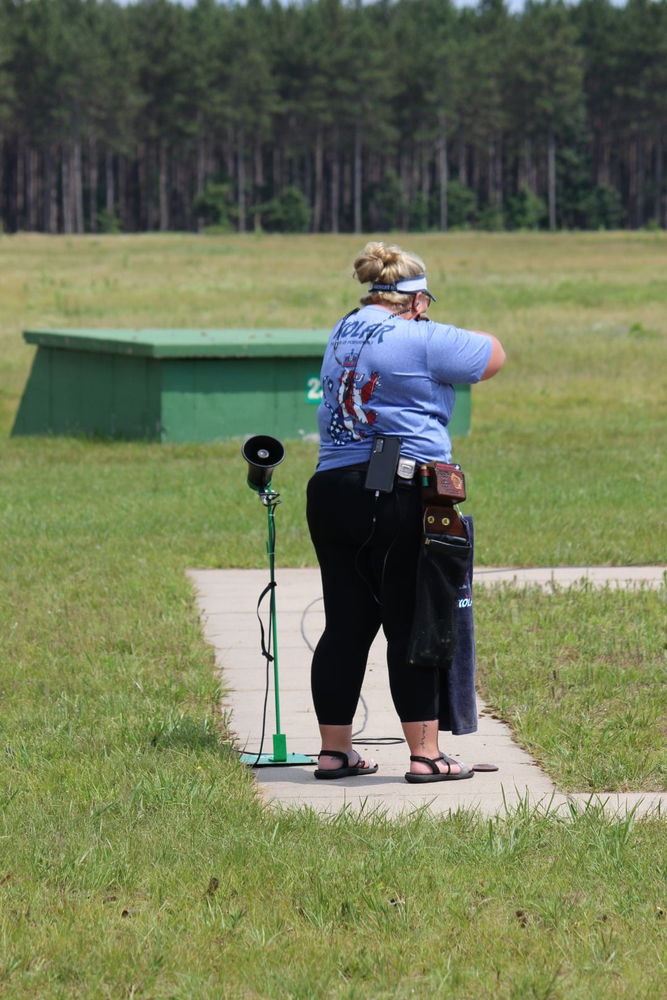
When Karlie Klas stood on the line at her first trap shooting practice, she didn't know that she was starting something that would shape her life.
“It was very intimidating,” she said. “I was the first in my whole family to start shooting, so I really had to learn everything the hard way.”
When she started, she stood out not only because she was a beginner, but also because she was one of the few girls doing it in the area. She ran into challenges that others also didn't understand, especially being cross-eyed dominant.
“I’m left-eyed dominant, but right-handed,” She explained. “When people told me to keep both my eyes open, I couldn't even see down the barrel - but I didn't know how to explain that at the time.”
Even her gun worked against her. It didn't fit properly, leaving her bruised and frustrated. After she shot, she would go into the clubhouse and get two root beers; one to drink and the other to ice her cheek. However, this was a turning point; while she sat on that stool, she met a more experienced shooter who took the time to adjust her gun and teach her how to make it fit properly.
Despite other obstacles, Karlie stuck with it and improved quickly with hard work. Soon, she wasn't just participating, but excelling. While she was still in high school, she started to participate in registered competitions, giving her a jump in the competitive world.
In high school, she participated in the ACUI National Championship in San Antonio, TX, and the Grand American World Trap Shooting Championships in Illinois. At home, she dominated the high school circuit, becoming the Wisconsin High School Clay Target League women’s champion three years in a row. One of her biggest achievements was reaching the 27-yard line in handicap, a goal she had been chasing for years. In handicap trap, your previous scores represent how far away you shoot; the 27-yard line is the furthest away and takes consistent high performance.
Her success in trap shooting isn't just about hitting targets; it's about mastering something less visible, the mental game.
“Once you can hit one, you can hit them all,” she said. “At that point, it's all mental. Staying focused, doing the same thing every single time - it's harder than people think.”
That mindset now shapes the way she coaches.
After gaining confidence and discipline through the sport, Karlie felt a pull to give back. She became a high school trap coach, determined to pass on not just skill but the advice that changed her.
“This sport gave me so much confidence and determination,” she said. “I wanted to pass that on to the next generation.”
So she started coaching for Plattville High School. When coaching students, she guides students who are beginning their journeys, like she once did. She reminds them that everyone starts somewhere and shares her own humble beginning.
“The first time I ever shot, I got a four,” she said. “And I got better. They can too.”
Her coaching focuses on grit, the ability to move on after missing a target.
“At first, you improve really fast,” she said. “But those last few targets - the difference between a 20 and a 25 - that's the hard part. That's mental stamina.”
She emphasizes repetition, focus, and routine. Whether they practice 25 or 400 shots a day, she teaches her athletes to start ready and consistent.
The results speak for themselves.
One of her most memorable coaching moments came during a fall practice when her team's top five shooters posted scores of 50, 49, 49, 48, and 47 out of 50. It wasn't just one standout success; it was team-wide results.
“Seeing that across several different students was so cool,” she said. “It really affirmed that I must be doing something right.”
Even though she coaches, she still shoots competitively, and sometimes alongside her students at practice.
From a nervous beginner with a bruised cheek to a state champion to a mentor, her journey is proof that success is not just about hitting targets but building resilience, confidence, and community along the way.