
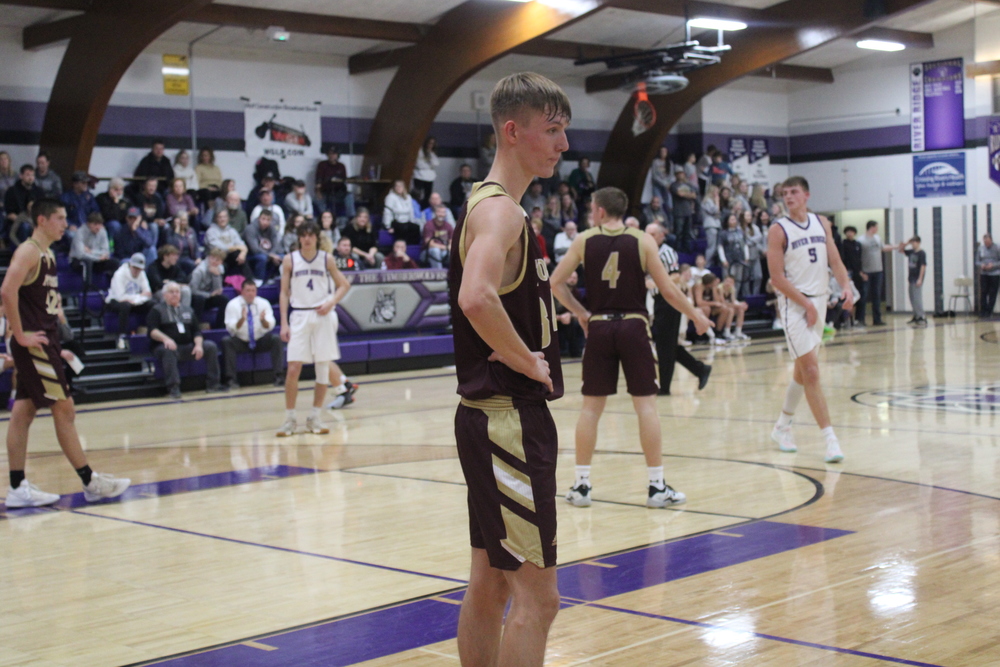
Returning to coach at the high school where you once played can be a rewarding experience. According to Gavin Wunderlin, the main reason for coming back was to give back to the program. He explained that he wanted to share his knowledge and experiences with younger athletes and help them grow both as players and as people. Coaching allows him to contribute to a program that helped shape him as a student-athlete, which makes the role very meaningful.
Gavin Wunderlin’s basketball journey shows why he is a great fit as a JV coach at Potosi High School. A 2024 graduate of Potosi, he was an all-conference player who helped represent the program at a high level. After high school, he continued his basketball career at Edgewood College for one year before transferring to UW–Platteville. He now back at Potosi as a JV coach, Wunderlin uses what he learned as a player to help develop younger athletes and carry on the program’s traditions.
Wunderlin also discussed how the program has changed since he was a player. He noted that a lot of the traditions remain the same and that the sense of family within the team is still strong. Maintaining these traditions helps current players feel connected to past teams, which is an important part of building team spirit and pride in the program.
One of the biggest lessons Wunderlin learned as a player was to always try your best, even if you are not at 100%. He now emphasizes this lesson with his athletes, encouraging them to give their all in practice and games. He believes that if players put in maximum effort, the results will take care of themselves. This mindset helps players focus on what they can control, rather than worrying about outcomes.
Wunderlin enjoys working with JV athletes because they are still learning the basics of basketball. He likes teaching them fundamental skills and seeing their improvement over time. He also helps players balance school, sports, and life outside of athletics by encouraging a mindset that applies to both the classroom and the court. This approach helps players develop habits that benefit all areas of their lives.
When asked about the qualities of a successful JV player, Wunderlin emphasized the importance of being willing to try and being coachable. He explained that everyone makes mistakes, but players who are willing to work on them and learn from feedback are the most successful. To motivate players who are still developing, he uses drills that reinforce the skills they will need for upcoming games and provides clear, direct feedback.
For players who want to move up to varsity, Wunderlin advises avoiding mental mistakes and being physical on the court. He believes that understanding the mental and physical demands of the game is crucial for success at higher levels. Coaching on the same court where he once played gives him a unique perspective. He admitted that it sometimes feels unreal, but coming back in a coaching role provides a new and exciting experience.
Overall, interviewing Wunderlin showed that coaching is about more than just teaching skills. It is about giving back, encouraging effort, and helping players grow both on and off the court. The lessons the coach learned as a player continue to shape how he mentors young athletes today.