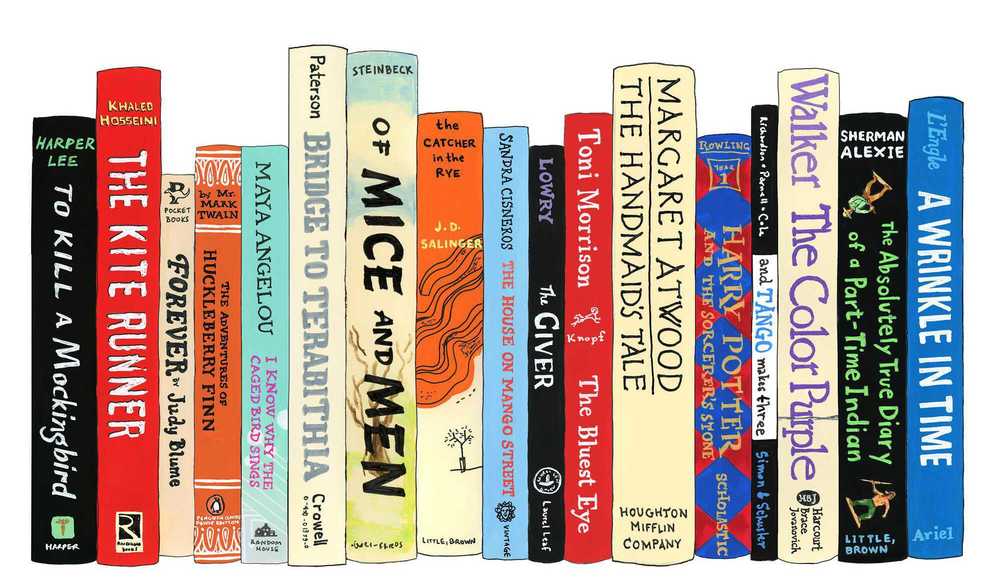
Book banning is the practice of challenging certain books to remove them from classrooms and school libraries. This trend started in the early 1600s concerning religious ideas. Why? Simple, because people in power did not want others to form ideas that do not align with theirs. The fear of not having complete control over their people was too much of a risk. In modern times, books are sometimes banned by certain schools or communities when certain groups object to content or themes. Books with racial, LGBTQ+, and historical contexts and themes are being deemed inappropriate in schools across the country. To others, banning books in schools limits educational levels and freedom of choice.
On a local level, at Platteville Middle School in Platteville, Wisconsin, a case of book banning emerged. A group associated with Moms For Liberty reached people in the school and was influenced to start their own call for change. Four members in the community, including one administrator, a teacher, a community member, and one library staff member, attempted to have five books removed from the middle school library. The books challenged were Heartstopper(books 1-4), It’s Perfectly Normal, Flamer, Me and Earl and the Dying Girl, Mad Magazine, and All Boys Aren’t Blue. The challenges were unsuccessful, and every book except one stayed in the middle school library. The one book that got moved into the high school library was All Boys Aren’t Blue by George M. Johnson. Some of the books contain context of LQBTQ+ rights, sexual activity, and racial violence.
In an interview with Potosi School District’s Board of Education President, Curt McMahon, he was asked about what would happen if a book ban were ever attempted here. McMahon’s replies made it clear that he has full trust in the school’s library staff to make sure that if there was something deemed inappropriate for the school, it would be dealt with in the right way. A major question that he was asked: “Do any local decisions have an impact on decisions made here at Potosi?” His response was, “We are not influenced by other school districts, no matter where they reside. We may review how other districts have handled an issue, but ultimately the decision will be a local decision.” This answer is no surprise in our school district, due to the fact that our school board has always contained leaders, and follows what they believe in, not what others think.
Another question was how a potentially controversial book might be presented to the students; would it make a difference if the book was in a teacher's book collection available to students, or if it was being taught in the curriculum? McMahon replied, “It would be different if a book were just available in the library or if it was being required in the classroom. A book that is in the library can be removed if a decision has been made to remove the book for whatever reason. If the book is required in the classroom for instructional purposes and comes under question, it would take more review by the staff and administration before coming to the board. There would be additional questions about why and how that book was being used for instructional purposes.”
Banning a book is very controversial, but it is a topic that needs to be talked about. A high school senior shared her opinion on book banning: “It puts a filter on the knowledge available, and if you take away the history of our government, it would be egotistical and ignorant.”
There is not much unbiased information on how banning books affects schools. There are voices on both sides of this challenge, and both bring up valid argumentative points. For those who are for banning books, withholding graphic information or explicit content helps adults feel in control over students’ education. Keeping a child away from violence or explicit ideas may be a benefit to students who may not be mature enough for the topics if they are taught in the curriculum. However, if the book is just sitting in the library, the student should not always be told what they are allowed and not allowed to read. The school should not be responsible for what a student chooses to read out of the library.
Editor's Note: This is the final article from the student journalists for the 2024-25 school year. Thank you to everyone for reading our stories and supporting our student journalists. - Mr. Fry